Tuesday, 20 August 2013

Post 5 - Script Formatting

Before writing the first draft of my script, I took the opportunity to look at various websites with tips and outlines on the process of formatting. This website gave me a detailed overview on this process and from it I have selected aspects which I feel are most relevant for me.

Below is the information the website has on FONT, MARGINS, AND SPACING, as I have only written a full script once [my group's opening squence video didn't contain any dialogue and we did not feel a need for a script] for a previous media short, it is important I am aware of the specific features of this aspect of script formatting. 


____________________________________________________________


Screenplays live on letter-sized paper (8.5 x 11 inches). They're always written in Courier font, 12 point, 10 pitch. No bold, no italics.
Page Margins:
Left: 1.5 inches
Right: 1 inch
Top: 1 inch
Bottom: 1 inch
Screenplay Element Margins
  • Slugline: left margin 1.5 inches
  • Action: left margin 1.5 inches
  • Character name: left margin 3.7 inches
  • Dialog: left margin 2.5 inches, right margin 2.5 inches (or 6 inches from left edge of page)
  • Parentheticals: left margin 3.1 inches, right margin 2.9 inches
Spacing Between Elements:
  • Between Slugline and Action: double space
  • Between Action and more Action: double space
  • Between Action and Character Name: double space
  • Between Character Name and Dialogue: single space
  • Between Dialogue and the next Character Name: double space
  • Between Dialogue and Action: double space
  • Between Character Name and Parentheticals: single space
  • Between Parentheticals and Dialogue: single space
  • Between Action and Slugline: double space
  • Between Dialogue and Slugline: double space
________________________________________


I also picked on this point 'The very first time a character's name appears in Action, it appears in ALL CAPS.' I was unaware of this and the extract to the fright, from Marvel's 'Avengers' also brought this to my attention. 'Cap' and 'Fury' have been written as both characters have already appeared in the scene.

Thursday, 11 July 2013

Post 4 - Beats

'Beats', within film-making, beats are described as 'the timing and movement of a film'. They are written out to display the events of a story, specifically concerning the events that effect the protagonist, such as a decision or choice.

The beat layout below is similar to Todorov's narrative theory of equilibrium. My idea of a short film fits into it near perfectly: There is a state of equilibrium at the start as we see a normal setting with the characters dorm room; we then see a disruption, everyone seems to have forgotten aspects of their lives; character realises what's going on and after time attempts to help the situation for the better. HOWEVER, my plot does not involve a state of equilibrium at the end, there is no full conclusion and the audience is left hanging as to what is going to happen, but is left with someone what of resolution.


  • Beat 1 – Introduce the world the film will be in
Character wakes up in a university dorm room.
  • Beat 2 – Introduce the character
Character looks into a mirror, brushing himself down.
  • Beat 3 – Introduce the problem
Pain in head of the character with flashes of images, who goes downstairs to find family or friends standing aimlessly around, looking as if they've forgotten something important.
  • Beat 4 – How the character chooses to solve the problem
Takes it as them messing around and 'solves' it by continuing on with life, ignoring what is going on.
  • Beat 5 – The character experiences a major set back
Realises he's gaining the memories of everyone, and in an attempt to ignore everything, hurts himself more
  • Beat 6 – The character is almost defeated
The pain and confusion becomes too much and nearly gives up trying to think of a solution
  • Beat 7 – The character rejects a solution
Rejects somehow telling people about what's happening, as no-one believes him when he tries.
  • Beat 8 – The character discovers a solution
Figures out that he can attempt to give back these memories by writing them down and sketching them to give back to people if he meets them.


Tuesday, 9 July 2013

Post 3 - Characterisation

Definitions of Protagonist and Antagonist

Protagonist: Synonym to 'hero', the main character of a film which the conflict will effect the most.


Noun
1. The leading character or major character in a drama, movie, novel, or other fictional text.
2. The main figure or one of the most prominent figures in a real situation

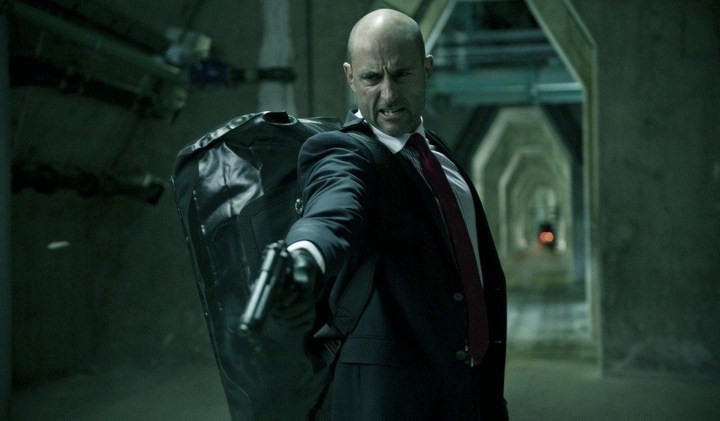
Protagonist from 'Welcome To The Punch' - Max

Antagonist: Synonym to 'villain', the character who goes against the protagonist, is the one causing the conflict in a film.


1. A person who actively opposes or is hostile to someone or something; an adversary.
2. A substance that interferes with or inhibits the physiological action of another.

MY FILM IDEA

Log Line: 'Whilst the rest of the world begins to lose their memories. A sole teenager starts to learn things about the world that they had never dreamed of.'
Protagonist - Thomas is an 18 year old male from a working class background going to Oxford Uni, who doesn't fit into a set social group, somewhat of a 'mis-fit'.
Antagonist - For this film, the antagonist is not a single person, instead it is an event. This event being the removal of memories from people's brains by an unknown source.

Interview with my protagonist
I conducted an interview with my protagonist to gain an idea of how they would act in certain situations and what their characteristics were, without knowing details about the character, I wouldn't be able to construct a plot around them. 

Questions from Sabene to me about my protagonist:
Do you find your background affects your daily life at university?
How were you able to enter Oxford?
Is it difficult not fitting into a social group, is so why?
Why are you classed as a 'mis-fit'? Are you content with this classification, if so why?
Do you enjoy University life? Why?

What do you study at university?

Answers to questions above:
1. Yes, because of my working class background, I am subject to prejudice, especially when in class or evening events.
2. A lot of hard work, I deem myself as being very intelligent, although I try not to brag about it, or have too much of a big head.
3. Of course, not really fitting in means there aren't a lot of fellow students whom I get along with, nor converse with on a daily basis.
4. Within the uni it is mainly because of my background, but also because I'm not athletic  musical or fit into a 'stereotypical classification' within education. Not particularly, I am a shy individual and struggle to be myself, this is why I don't like the classification, but I want to overcome it.
5. As a majority, yes. I love my subject, my professors and learning new things and having new experiences. However, the social side lacks interest to me, although having only been at University for, oh, coming up to 5 months now; I'm hoping this will change.
6. I study Law.

From the interview above, I created a moodboard for my protagonist, this moodboard will take aspects of the answers and visualise them, from this I can set up the plot.

I also made a moodboard for my antagonist, however, as there is not true antagonist, not a physical villain the moodboard consists of ideas about how it could work.